Hedge
If a relay hasn't returned by a fixed deadline, Smart Router fires the same request to a second node in parallel. The first response back wins; the slower attempt is discarded.
What it solves
Tail latency. With hedging off, a node that's slower than its 99th-percentile but not yet timed out drags every request behind it. With hedging on, the slow node's tail gets cut off by the fastest of N parallel attempts.
How it triggers
A ticker runs in the relay state machine. On each tick, if no response has been received and an attempt slot is free, a new attempt is fired. Subsequent ticks continue firing parallel attempts up to the retry cap.
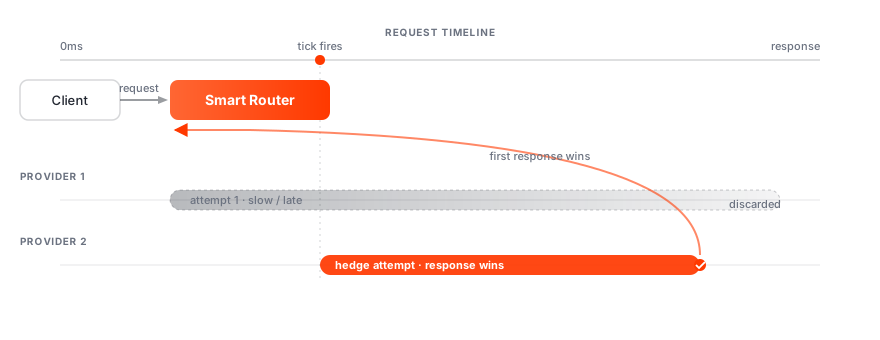
The mechanism is the same as retry — the only difference is why the next attempt is fired:
| Trigger | What it's called |
|---|---|
| Previous attempt errored | retry |
| Previous attempt is taking too long | hedge |
Both increment the same retry counter. Both cap at 10 attempts per relay.
When hedges win
| Scenario | Hedge helps? |
|---|---|
| One slow node, others fast | yes — hedge skips the slow one |
| All nodes slow | no — fastest is still slow |
| One unresponsive node | yes — but retry does this too once it errors |
| Tail latency on indexer-style heavy reads | yes — significant p99 improvement |
Write traffic (sendRawTransaction) |
covered by stateful fan-out instead — write paths are sent to all eligible nodes unconditionally, independent of hedging |
When to be cautious
- Cost — every hedge fires a real upstream request. Cost-sensitive deployments with high traffic should weigh hedge gains against per-call upstream pricing.
- Idempotency — hedging non-idempotent calls (writes that mutate state on the upstream) can produce duplicate side effects. Smart Router doesn't currently distinguish; if your upstream protocol is non-idempotent, disable hedging or accept the risk.
- Node rate limits — hedging multiplies your request rate against each node. Make sure your selection policy spreads attempts across the pool.
Configuration
The hedge tick interval is currently chain-derived (from average_block_time and per-method category) rather than a YAML knob. The maximum hedge attempts share the 10-attempt cap with retries — see Retry.
Observability
| Metric | Meaning |
|---|---|
smartrouter_hedge_total |
hedge (batch-ticker) relays sent |
smartrouter_hedge_success_total / smartrouter_hedge_failed_total |
hedged requests that succeeded / failed |
smartrouter_hedge_attempts |
histogram of hedge relays per request (buckets 1…10) |
| Tracing | each hedged attempt is a parallel span under the same parent |
See the Metrics reference for labels and types.